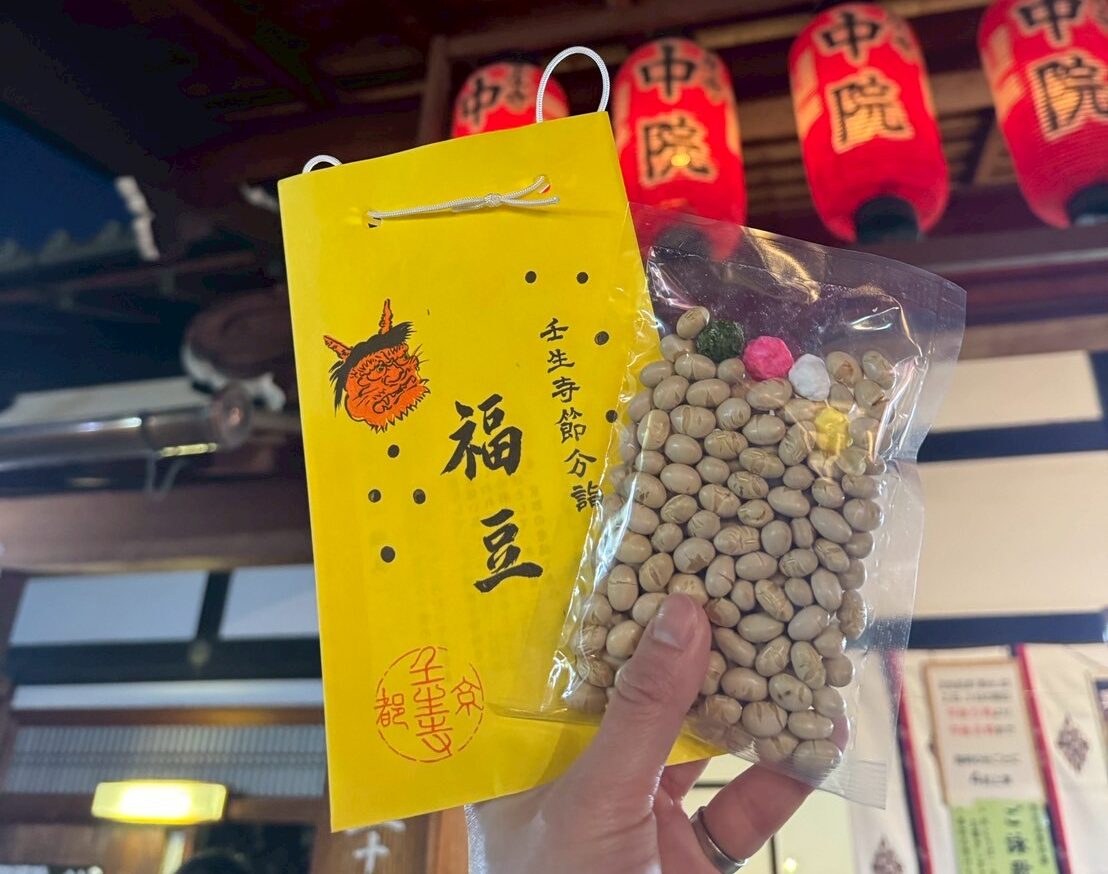
鬼は外、福は内。
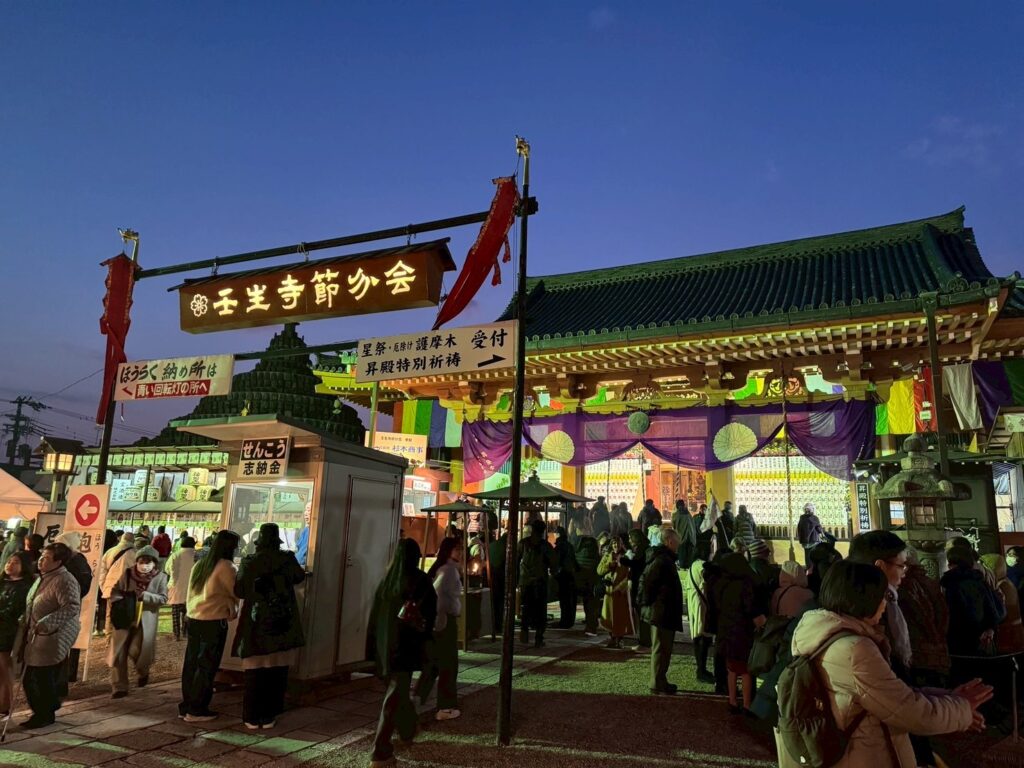
節分の前日である2月2日の夕方、私たちは壬生寺の節分祭に行ってきました。
中に入ると、すでにたくさんの屋台が立ち並び、多くの人でにぎわっていました。
壬生狂言鑑賞
壬生寺では、毎年節分の前日と当日の2日間、『節分』という狂言を上演しています。初日であるこの日、私たちもその狂言を見るために、行列に並びました。
公演は17時から20時まで、1時間に1回ずつ上映される仕組み。しかし列はかなり長く、警備員さんによれば、人数に限りがあり、もしかしたら1時間後の公演になってしまうかもしれないとのこと。さすが、人気なだけあります。
ドキドキしながら並びましたが運よく私たちはギリギリ滑り込むことができ、最後列で鑑賞することができました!
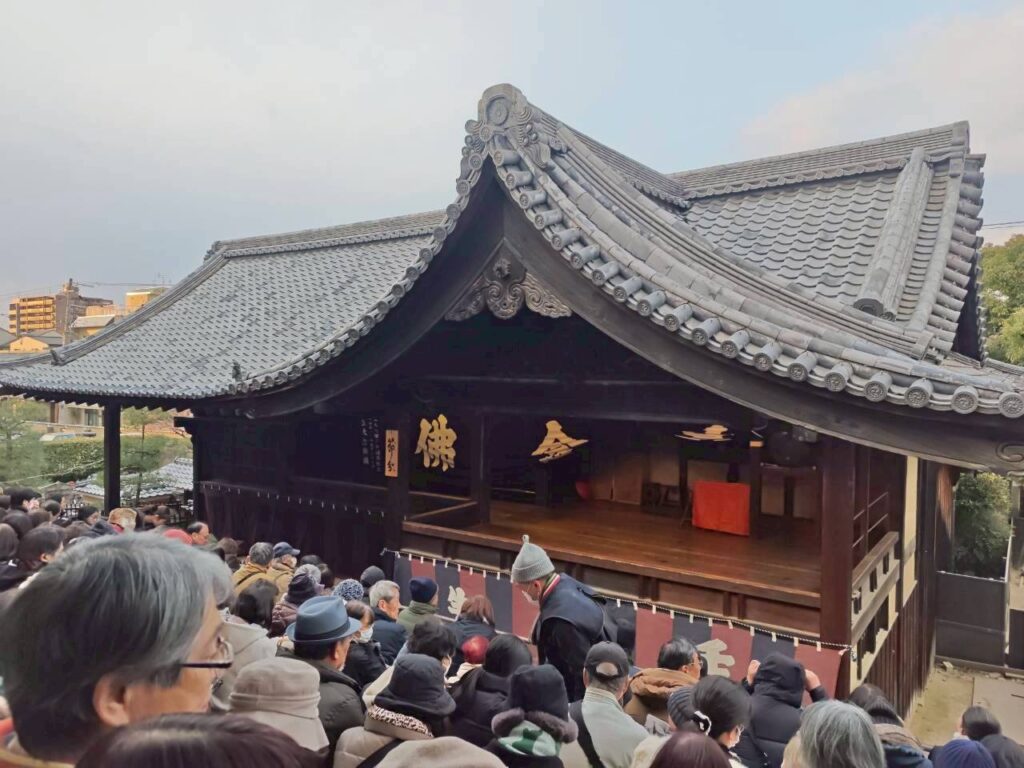
このように、室内ではなく屋外で鑑賞するスタイル。舞台との距離は思ったより近いです。
上演開始を待つ間は、購入した壬生狂言の解説本を読んだり、狂言理解できるかなぁなどの話をしていました。
会場の時計が17時を指しました。太鼓の音が鳴り響き、静まる場内。寒空の中、静かに上演が始まりました。演者はみな仮面をつけ、言葉を発さずに小道具と身振り手振りで演じます。
今回の演目『節分』は、節分の日に、女主人公である後家が家で厄払いをしてもらうも、そのあと鬼がやってきて…というお話。45分間の狂言の最後には、女主人公の後家が鬼に豆を撒くシーンが。ここが一番の見どころといってもいいかもしれません。かなり勢いのある投げっぷりに、会場内の観客からも笑いが起こっていました。
こうして、45分間の上演が終わりました。
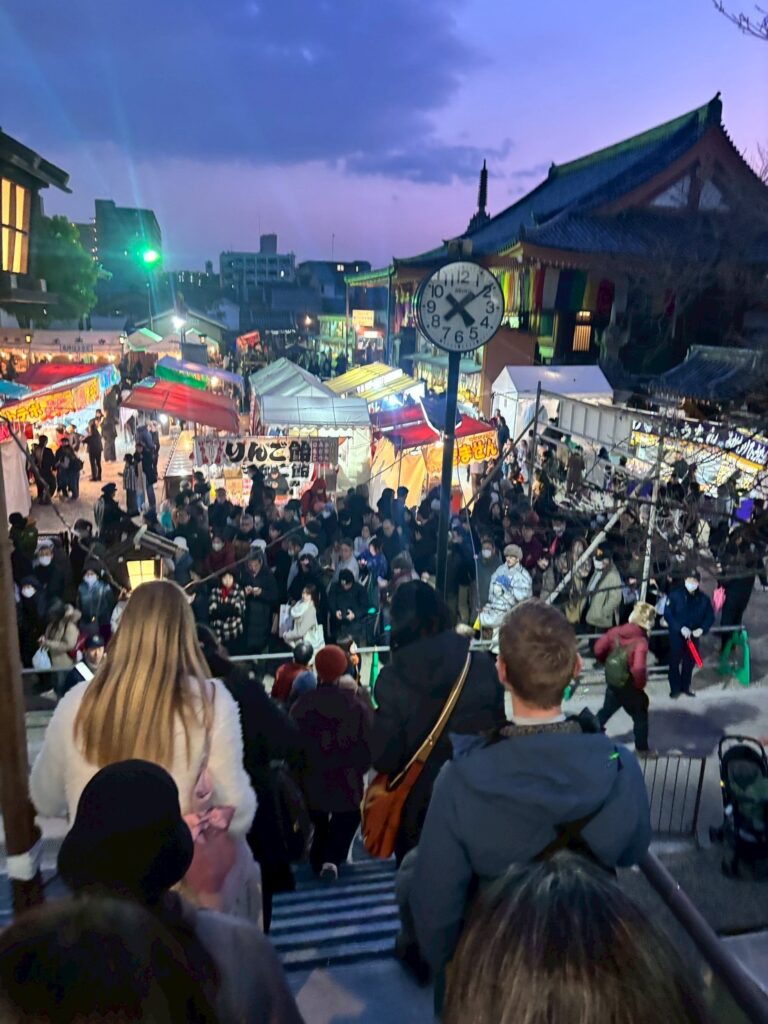
上演後、階段を降りると次の公演を待つ長い行列が…!
壬生狂言とは?
壬生狂言は今から700年ほど前の鎌倉時代に、壬生寺を復興させた円覚上人により、仏の教えを説くために始められたものです。1976年にはその伝承形態が高く評価され、国の重要無形文化財制度の第一号登録として、京都府下で最初に指定を受けました。
壬生狂言の定期公開は、節分だけではなく、4月29日から5月5日の春の公開、10月の連休に行われる秋の公開と年に3回行われています。
また、狂言を演じる構成員たちは、小学生から70歳代まで、主に地元に居住する約35名で組織されており、舞台で狂言を演じたり囃子を奏でる「狂言師」と、着付けを担当する「衣装方」がいるそうですが、後継者の養成が課題となっているそうです。
伝統芸能を持続させるために日々努力していらっしゃる演者、裏方の方々に頭が下がる思いでした。
屋台散策
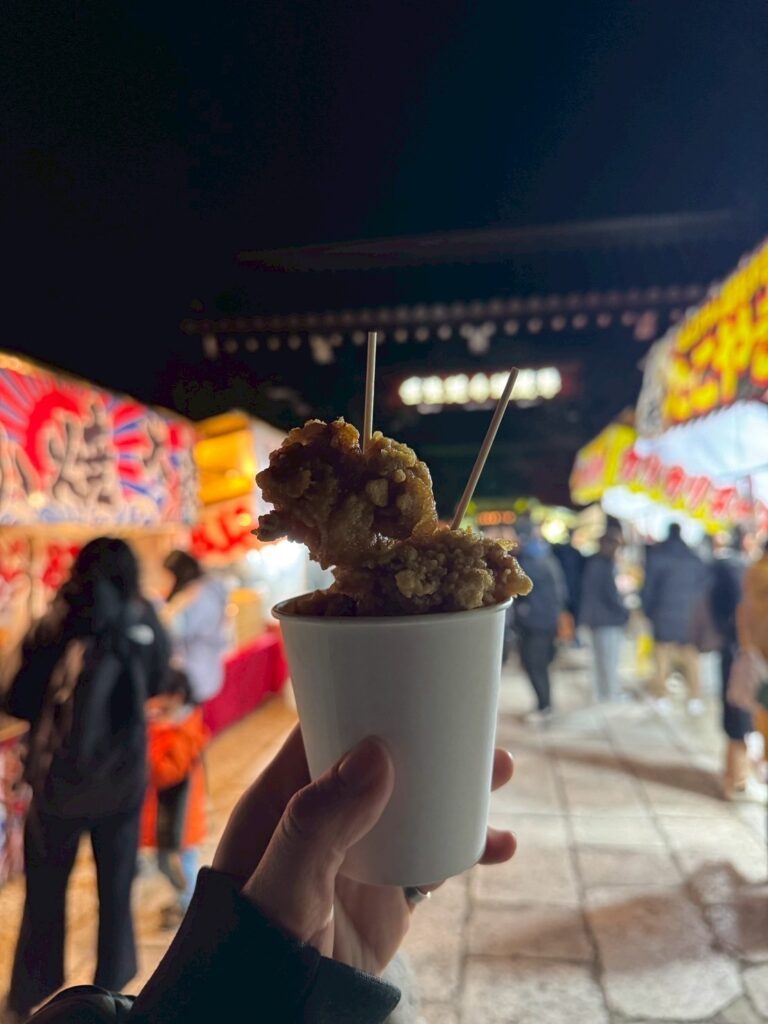
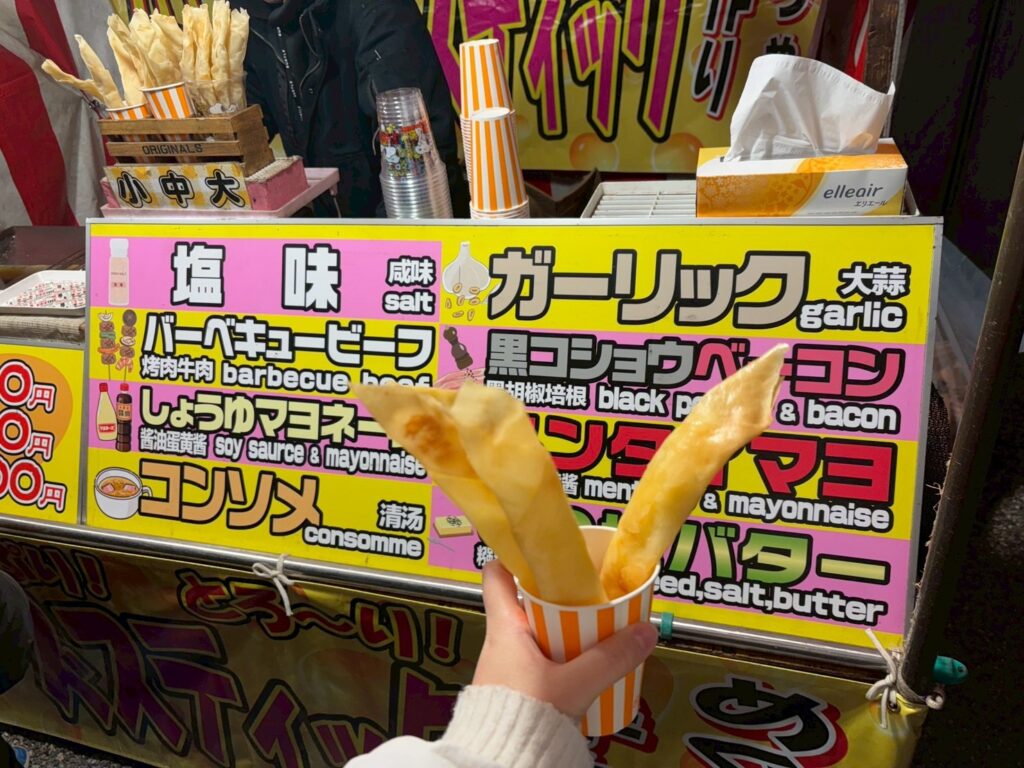
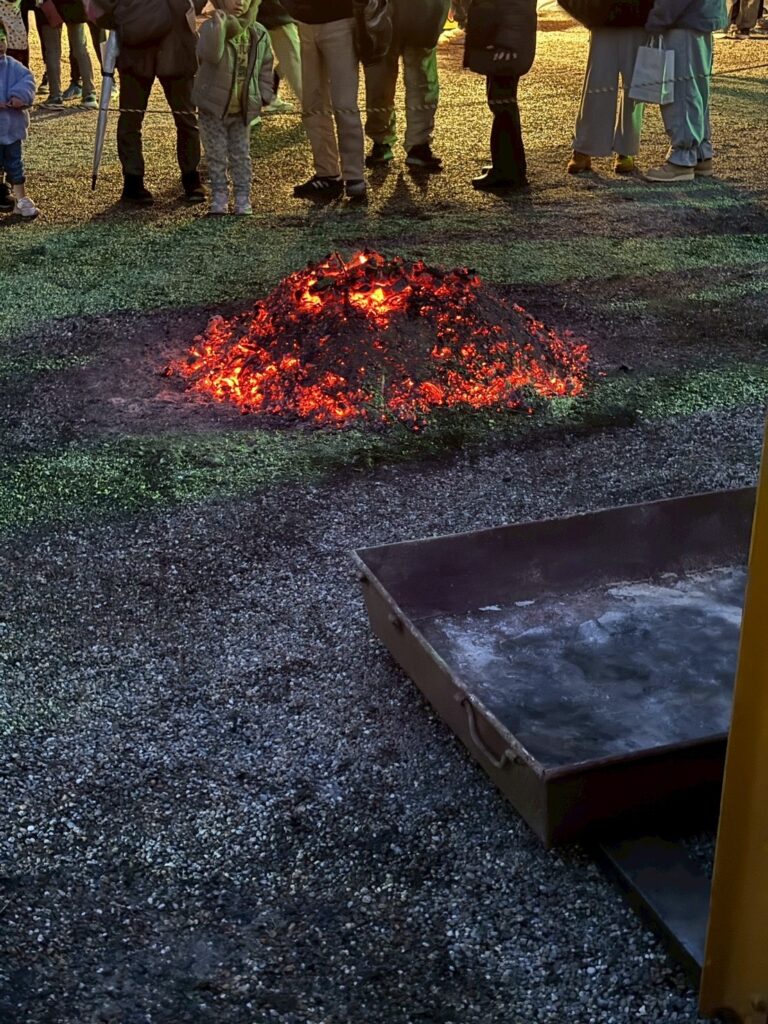
狂言を見終わった後は、護摩木を見たり、屋台を散策したり、おみくじを引いたりしました。屋台は夏のお祭りのイメージですが、冬の寒空の下の屋台も新鮮で楽しかったです。
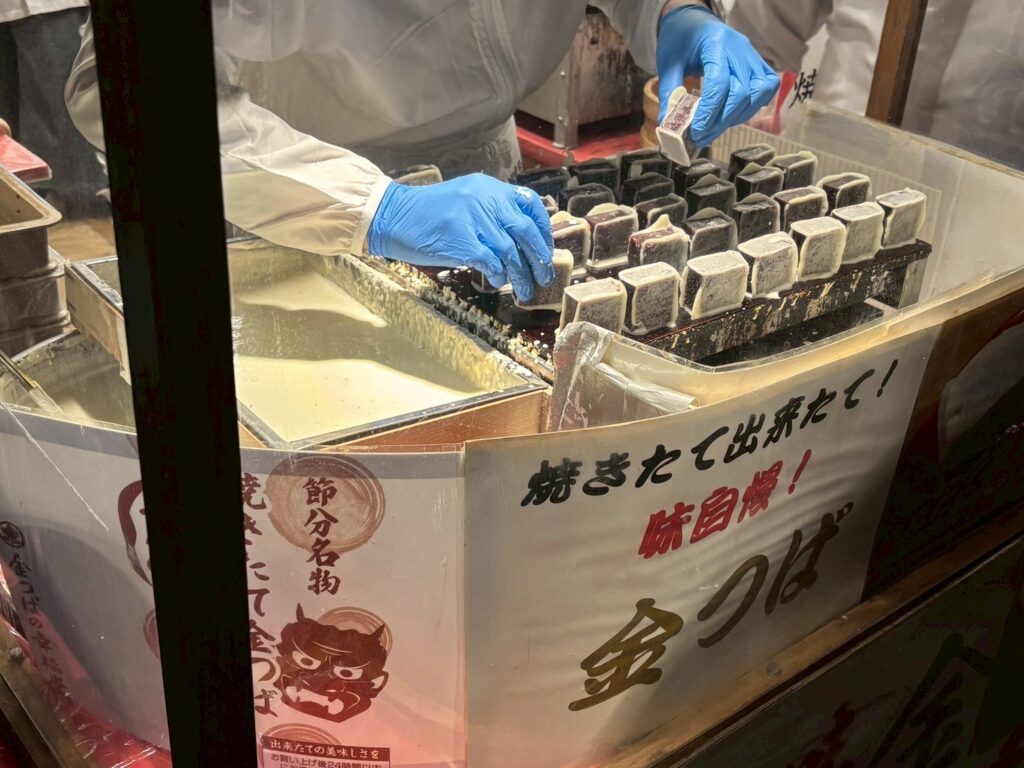
その後は、壬生寺を出たところにあるきんつばの幸福堂さんで、節分限定の金つばをメンバーで食べました。
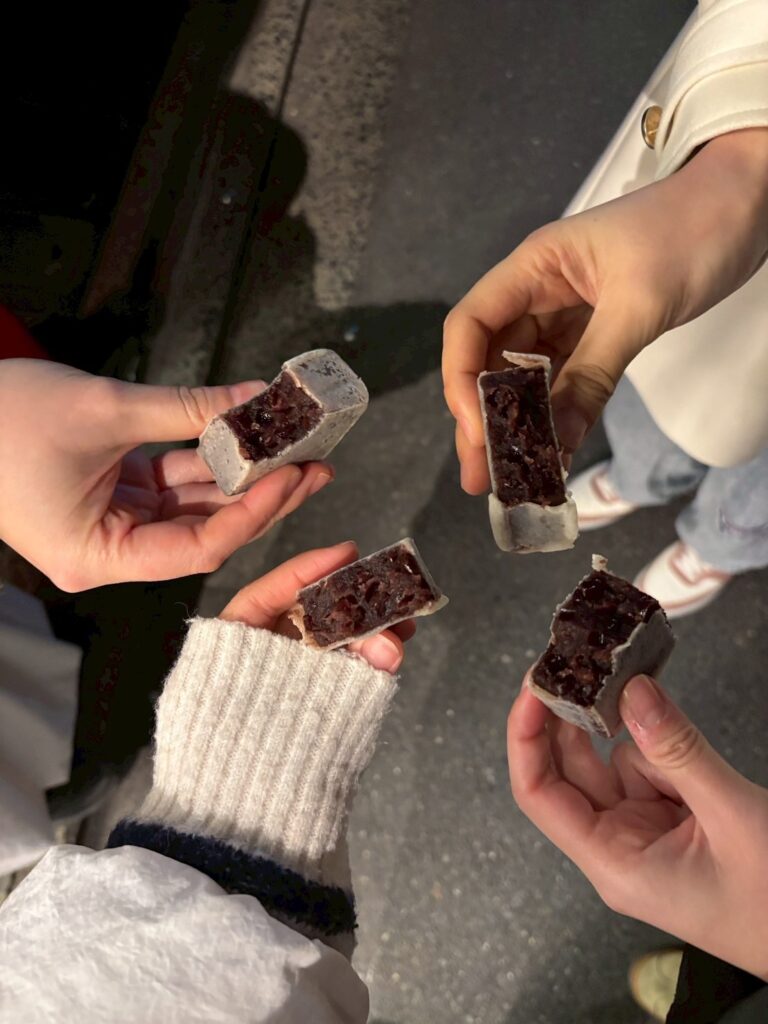
職人さんが手作りしているところを見ることができ、やはり人気なようでお客さんも多かったです。出来立ての金つばはほんのり温かく、控えめな甘さでとても美味しかったです。
そもそも節分とは
節分とは、漢字の通り「季節を分ける」という意味を持つ言葉で、立春、立夏、立秋、立冬といった、季節の変わり目の前日を節分と呼んでいます。
その中でも特に、2月の節分は春の訪れを象徴する大切な日である立春の前日であることから、節分が2月に定着したそうです。
かつて、立春は新年の始まりと考えられていたため、2月の節分は1年の終わり、大みそかに近い立ち位置になっていました。そのため、節分では厄や災難を払うというということになっています。
なぜ大豆をまくのか
大豆には魔除けや生命力が宿ると考えられており、日本では古くから穀物には邪気を払う力があると考えられてきたためです。
解説本によれば、今回の演目『節分』は、「鬼(病気、災難などの不幸)を招く甘い誘惑に負けずに、マメ(真面目に、こつこつ)働くことによってこそ、福徳は得られるものである」ということを教えるものだそう。大豆には、マメに働くという意味も含まれていそうです。
私たちも、節分を通して、鬼に負けずに真面目に働かないといけないと感じさせられました。
\ Hello, Friends /
Demons out, fortune in.
On the evening of February 2nd, the day before Setsubun, we visited the Setsubun Festival at Mibu Temple.
Inside the temple grounds, numerous food stalls were already set up, and the area was bustling with crowds.
Mibu Kyogen Performance
At Mibu Temple, a traditional play called “Setsubun” is performed over two days: the day before and the day of Setsubun itself. On the first day, we joined the line to watch the performance.
Performances ran from 5:00 PM to 8:00 PM, with one showing every hour. However, the line was quite long. The staff informed us that due to capacity limitations, we might have to wait for the next performance. It was clearly very popular. We waited anxiously, but luckily managed to get in just in time, securing seats at the very back.
The performance was held outdoors rather than indoors, and the stage was closer than we had expected.
While waiting for it to begin, we read the guidebook we had bought about Mibu Kyogen and chatted about whether we would be able to understand it.
At 5:00 PM, the clock struck. The sound of drums echoed, and the crowd fell silent. Under the cold evening sky, the performance quietly began. All the performers wore masks and acted without speaking, using only props and gestures.
This performance, “Setsubun,” tells the story of a widow whose home is purified on Setsubun day, only for an ogre to appear afterward. Toward the end of the 45-minute play, there is a scene in which the widow throws beans at the ogre—perhaps the highlight of the performance. The energetic bean-throwing drew laughter from the audience, bringing the play to a lively conclusion.
What is Mibu Kyogen?
Mibu Kyogen originated about 700 years ago during the Kamakura period. It was introduced by the monk Engaku, who revived Mibu Temple, as a means of teaching Buddhist principles.
In 1976, it was designated as an Important Intangible Cultural Property, becoming the first such designation in Kyoto Prefecture.
Mibu Kyogen is performed not only during Setsubun but also three times a year: during the Spring Performance (April 29th to May 5th) and the Autumn Performance (during the October holidays).
The performers consist of about 35 members, ranging from elementary school children to people in their 70s, most of whom are local residents. They include performers who act on stage and play the accompanying hayashi music, as well as attendants responsible for costumes.
However, passing down the tradition to future generations remains a challenge. I was deeply impressed by the performers and staff who work tirelessly to preserve this cultural heritage.
Strolling through the food stalls
After watching the kyogen, we looked at the gomagi (sacred wooden sticks), strolled among the food stalls, and drew omikuji fortune slips. Although food stalls are often associated with summer festivals, experiencing them under the cold winter sky felt refreshing and unique.
Afterward, we visited Kofukudo, a kinpira shop just outside Mibu Temple, where we shared their limited-edition Setsubun sweets. We were able to watch the artisans making them by hand, and the shop was clearly very popular.
The freshly made kintsuba were slightly warm, with a delicate sweetness, and absolutely delicious.
What is Setsubun?
Setsubun literally means “seasonal division,” referring to the day before the beginning of each season. Among these, the February Setsubun became the most significant, as it falls just before Risshun, the start of spring.
In the past, Risshun was considered the beginning of the new year, making Setsubun similar to New Year’s Eve. It is therefore a time to ward off misfortune and invite good fortune.
Why Do We Throw Soybeans?
Soybeans are believed to possess protective power and vitality. In Japan, grains have long been thought to ward off evil spirits.
According to explanatory materials, this performance of “Setsubun” conveys that good fortune is attained through diligence and by resisting temptations that may lead to misfortune, such as illness or disaster.
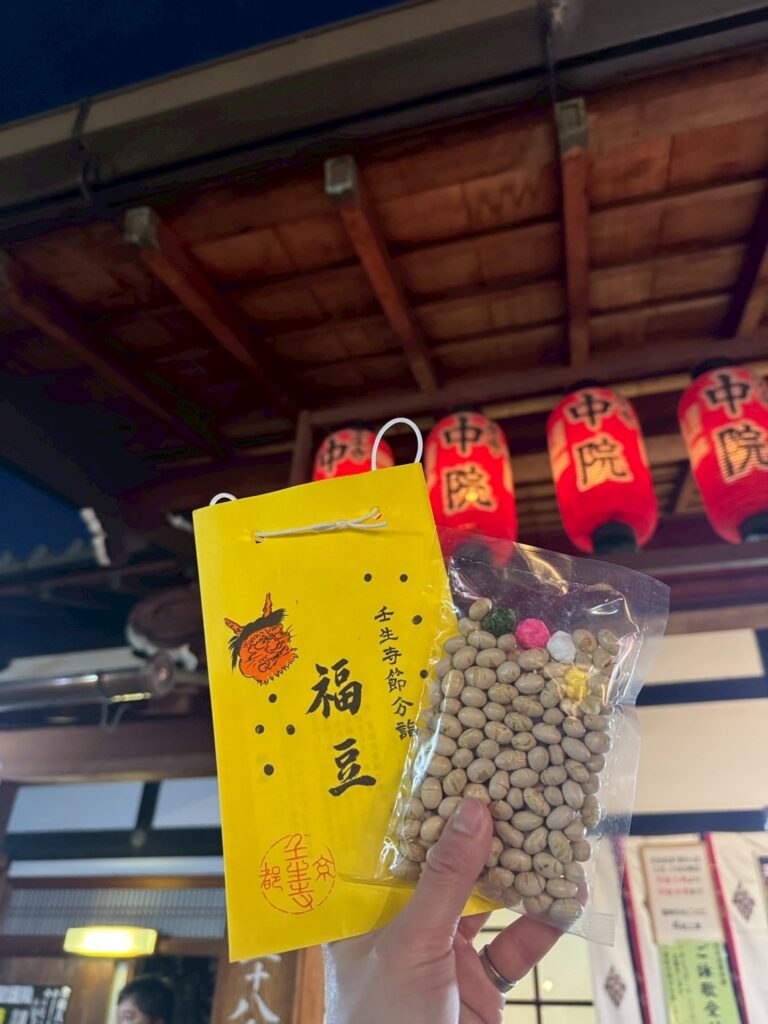
The word “mame” (soybean) is also associated with diligence. At Mibu Temple, lucky beans were sold as souvenirs. Through this experience, we too felt encouraged to work hard and keep misfortune at bay.
鬼出去,福进来。
在节分前夕的2月2日傍晚,我们前往壬生寺参加了节分祭。
进入寺内,早已摆满了众多摊位,人潮熙攘热闹非凡。
壬生狂言欣赏
壬生寺每年在节分前夕及当天连续两天上演名为《节分》的狂言剧。节分当天,我们也排队等待观看这场狂言表演。
狂言演出从17点至20点,每小时演出一场。我们等待入场时排了很长的队,据保安人员说,因人数限制,我们很可能只能等下一场。不愧是很有人气的活动啊!于是我们怀着忐忑的心情排队,最终幸运地挤进了最后排观赏!
演出采用露天剧场而并非在室内,观众与舞台的距离比想象中更近。
等待开演时,我们一行人翻阅着壬生狂言解说书,聊着“不知道能不能看懂这出狂言呢”之类的话题。
时钟指向17点。鼓声轰鸣,场内霎时寂静。寒空之下,演出拉开序幕。演员们都戴着面具,不发一语,仅凭道具与肢体语言来演绎。
本次演出的《节分》讲述的是一位丈夫在外工作的妻子在节分之日请人驱邪,却遭遇恶鬼造访的故事。45分钟的狂言剧终,寡妇向恶鬼撒豆的场景堪称全场高潮。她气势十足的撒豆动作引得全场观众哄堂大笑。至此,这场45分钟的演出落下帷幕。
何谓壬生狂言?
壬生狂言起源于约700年前的镰仓时代,由复兴壬生寺的圆觉上人创立,旨在宣扬佛理。1976年,其传承形态获得高度评价,作为国家重要无形文化遗产制度的首批登记项目,成为京都府内首个获此殊荣的艺术形式。壬生狂言的定期公开演出不仅限于节分时节,每年还举办春季公演(4月29日至5月5日)与秋季公演(10月连休期间),全年共计三次。表演团队由约35名成员组成,主要是当地居民,下至小学生,上到七十多岁的老年人。团队包含负责舞台表演与伴奏的“狂言师”,以及专司服饰装扮的“衣装方”,但后继人才培养已成为亟待解决的课题。这些为传承传统艺术而日夜耕耘的表演者与幕后工作者令人肃然起敬。
观赏完狂言后,我们观赏了护摩木,漫步于摊贩之间,还抽了签。虽然摊贩总让人联想到夏日的祭典,但在寒冬时节,冬日的摊贩也别具新意,令人愉悦。
随后,我们来到壬生寺外的幸福堂金馒头店,品尝了节分限定的金馒头。我们围观了匠人手工制作的过程,在这期间顾客络绎不绝,可见其人气之盛。刚出炉的金馒头带着温热,清甜不腻,顾客赞不绝口。
节分起源
节分一词如字面所示,意为“划分季节”,特指立春、立夏、立秋、立冬等季节交替的前一日。其中尤以二月的节分最为重要,因其紧邻象征春天来临的立春前夕,故节分习俗便固定在二月举行。古时立春被视为新年伊始,因此二月的节分便承载着岁末年终、近似除夕的特殊意义。正因如此,节分之日便形成了驱除厄运灾祸的传统习俗。
为何撒豆子
人们认为大豆具有驱邪和生命力,因此,自古以来谷物在日本就被认为具有驱除邪气的力量。
据解说书所述,本次演目《节分》旨在传达这样的理念:“唯有不屈服于招致鬼怪(疾病、灾难、经济萧条等不幸)的诱惑,勤勉踏实地工作,方能获得福泽。” 大豆的名称似乎也蕴含着勤勉工作的寓意。壬生寺也售卖福豆作为参拜者的纪念品。通过参加节分活动,我们深刻体会到必须不畏鬼魔、勤勉耕耘的道理。

コメント